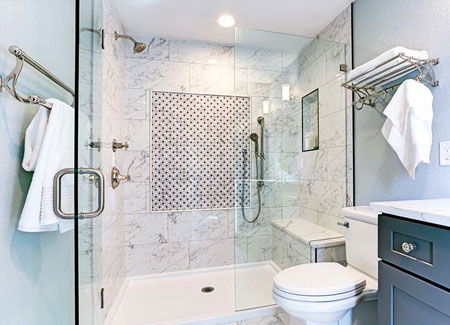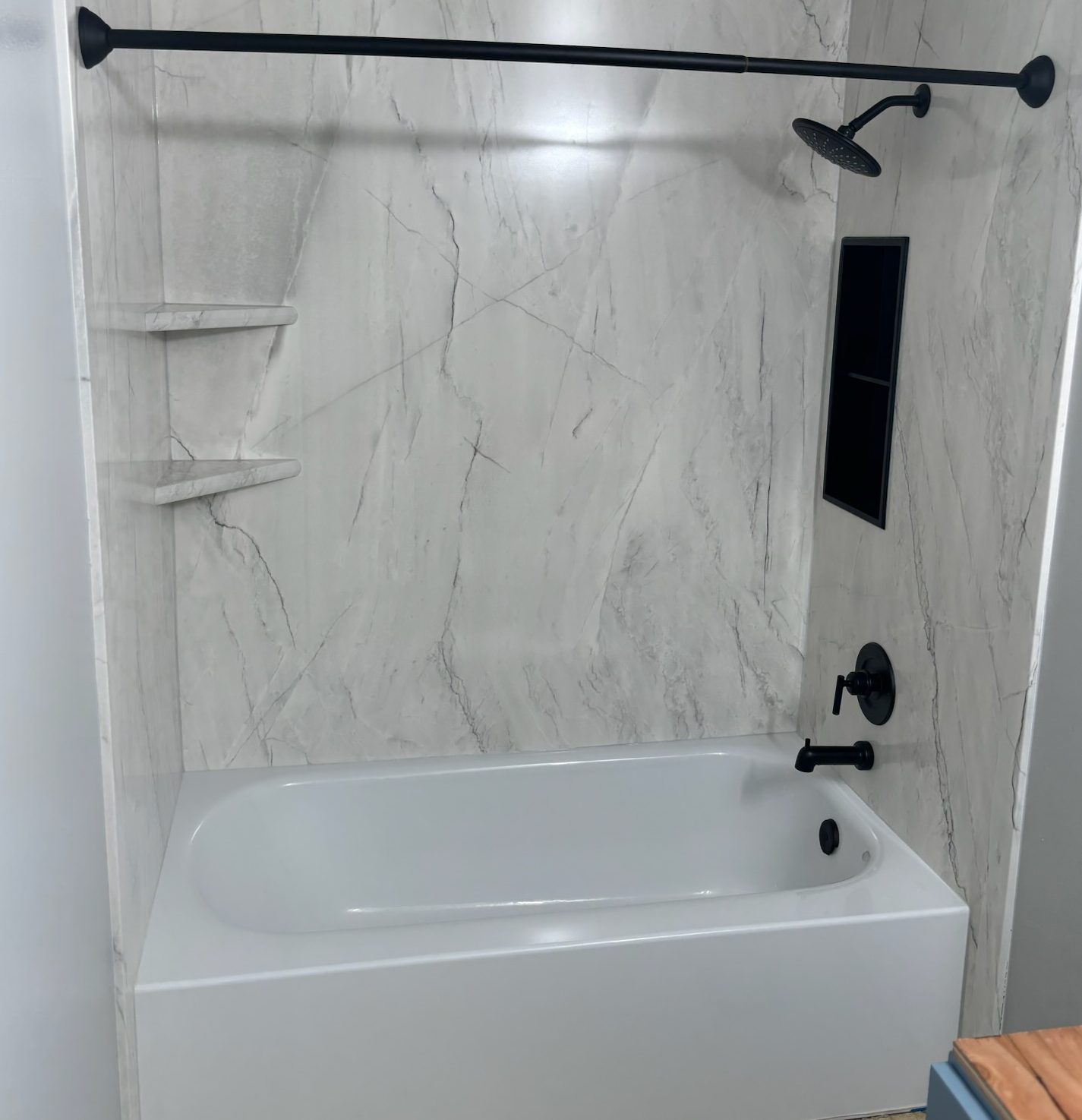
Key Takeaways
- A shower conversion can often stay focused on the wet area without turning into a full bathroom remodel.
- Features such as flooring, vanities, lighting, and storage may be worth keeping when they are in good condition and work with the new layout.
- Shower walls, the existing tub or base, damaged materials, and aging fixtures are more likely to need replacement.
Replacing an old bathtub or outdated shower does not automatically mean tearing apart the entire bathroom. In many cases, homeowners can keep surrounding features that still look good, function properly, and fit the updated layout.
During a shower conversion, the best approach is to preserve what still works while replacing anything damaged, outdated, or incompatible with the new shower. Plumbing, walls, fixtures, flooring, and storage should each be evaluated based on their condition, moisture exposure, expected lifespan, and how well they will fit with the finished design.
You May Not Need a Full Bathroom Remodel
A shower conversion can often be limited to the existing wet area. If the vanity, flooring, lighting, storage, and surrounding finishes are still in good shape, there may be no practical reason to replace them simply because the tub or shower is changing. Keeping usable features can help control costs, shorten the project, and reduce disruption inside the home.
However, saving an older component is only worthwhile when it will continue to serve the bathroom well. A fixture that is near the end of its lifespan, a floor with signs of moisture damage, or storage that interferes with the new layout may be better addressed while work is already underway. The goal is not to keep as much as possible. It is to avoid unnecessary work without building a new shower around an existing problem.
What Can Often Stay During a Shower Conversion?
Every bathroom is different, but several features can often remain when they are stable, functional, and compatible with the new shower design.
Existing Plumbing Locations
Keeping the drain and shower controls in roughly the same locations can simplify the project by reducing how much plumbing needs to be relocated. This can be especially helpful when the current layout already works well for the planned shower.
That does not mean the existing plumbing should be reused without inspection. Accessible lines, valves, and connections should be checked for leaks, corrosion, age, and compatibility with the new shower system. The location may be worth keeping even if some of the plumbing components need to be updated.
Bathroom Flooring Outside the Shower
Flooring outside the shower may be able to stay if it is dry, stable, undamaged, and visually works with the new design. This can keep a focused shower conversion from expanding into an unnecessary flooring project.
The area around the old tub or shower may still need attention. If the new shower has a different footprint, removing the existing unit can expose unfinished sections, damaged flooring, or gaps that require patching. Whether the floor can stay depends on how cleanly it connects to the new shower base.
Vanities and Bathroom Storage
A shower conversion does not automatically require a new vanity, medicine cabinet, or shelving. If those features still provide useful storage and do not crowd the shower entrance or interfere with the new enclosure, they can often remain.
Keeping a functional vanity can be a practical way to control the scope of the project. It allows homeowners to direct more of the remodeling budget toward waterproofing, the shower base, fixtures, and other components that directly affect performance.
Lighting, Mirrors, and Accessories
Existing lighting, mirrors, towel bars, and other accessories may also be worth keeping if they are in good condition and remain useful after the conversion. These elements are usually easier to preserve because they are outside the wet area.
Appearance still matters, though. A light fixture or mirror may function perfectly but make the updated shower feel disconnected from the rest of the room. Homeowners should consider whether keeping each feature will help the bathroom feel intentionally updated or leave it looking only partially finished.
What Usually Needs to Be Replaced During a Shower Conversion?
Some components are more likely to require replacement because they directly affect waterproofing, drainage, safety, and the finished shower design.
The Existing Tub or Shower Base
The old bathtub or shower base is typically removed as part of the conversion. The replacement base needs to fit the available space, align with the drainage setup, and support the preferred entry style.
This is also a good time to consider how easy the shower will be to enter. A low-threshold shower base can reduce the step into the wet area and create a more comfortable transition without making the bathroom look institutional.
Shower Walls and Surrounds
Existing shower walls and surrounds usually need to come out with the old tub or base. They may be worn, difficult to clean, damaged by moisture, or sized specifically for the previous system.
Removing them also allows the remodeler to inspect areas that are normally hidden. Any moisture damage, deteriorated materials, or waterproofing concerns can then be addressed before new wall panels or another moisture-resistant wall system is installed.
Faucets, Showerheads, and Controls
Older fixtures may still operate, but the conversion is often the most practical time to replace them. Once the shower walls are open, updating valves, controls, and plumbing connections is usually easier than returning to them after the new system has been completed.
New fixtures can also improve comfort, appearance, water efficiency, and compatibility with the updated layout. Replacing them now can help the shower feel like one cohesive project instead of a new enclosure built around aging hardware.
Damaged Subflooring or Framing
Any water-damaged materials found during demolition should be repaired before the new shower is installed. Soft subflooring, rotted framing, damaged wall materials, or lingering moisture should never be covered simply to keep the project moving.
The new shower needs a stable, dry foundation. Repairing hidden damage may add work to the project, but it protects the finished installation and helps prevent the homeowner from having to remove new materials later.
How to Decide Whether a Bathroom Feature Is Worth Keeping
When evaluating any part of the bathroom, start with three practical questions:
- Is it still in good condition?
- Will it work with the new shower layout?
- Will keeping it make the finished bathroom feel incomplete?
A feature does not have to be completely broken before replacing it makes sense. An aging valve, fixture, or accessory may technically work but be difficult to update once the shower is finished. In that case, replacing it during the conversion may be more practical than waiting for it to fail.
The opposite is also true. A vanity, floor, mirror, or light fixture that still functions well and fits the new design does not need to be removed simply because another part of the bathroom is changing. The best decision is the one that supports the finished space without adding unnecessary work.
When a Shower Conversion Becomes a Larger Bathroom Project
Sometimes the scope changes after the old tub or shower is removed. Demolition may reveal damaged flooring, aging plumbing, inadequate waterproofing, or deteriorated wall materials. The new shower layout may also make nearby storage, flooring, or fixtures feel awkward or outdated.
That does not automatically mean the entire bathroom needs to be rebuilt. It may simply be more practical to handle a few closely related upgrades while the area is already under construction. Homeowners should separate work that is necessary for the new shower from optional improvements that can reasonably wait.
How Nulux Baths Helps Homeowners Decide What to Keep
At Nulux Baths, we do not treat every shower conversion as a reason to tear out the entire bathroom. We help homeowners evaluate the condition of the existing space, determine which features can stay, and identify which components should be replaced so the finished shower works properly without adding unnecessary work.
Our bathroom remodeling options include grout-free wall systems, modern shower bases, updated fixture options, accessibility features, and professional installation planned around the existing bathroom. If you are considering a shower conversion in San Diego, schedule a consultation with Nulux Baths to discuss what can remain, what may need attention, and how to create a shower that fits your home and daily routine.
Frequently Asked Questions
Yes, if the flooring outside the shower is dry, stable, and compatible with the new layout. Some patching or replacement may still be needed where the old tub or shower meets the surrounding floor.
Not always. Plumbing may remain if it is in good condition and works with the new shower design, but accessible lines, valves, and connections should be evaluated before installation.
Only if the vanity is damaged, no longer fits the layout, or makes the updated bathroom feel incomplete. Keeping a functional vanity can help control the cost and scope of the project.
Damaged subflooring, framing, or wall materials should be repaired before the new shower is installed. Covering the damage can allow it to spread and may require removing new materials later.